
Managing Burnout as a Provisional Psychologist
Aug 03, 2026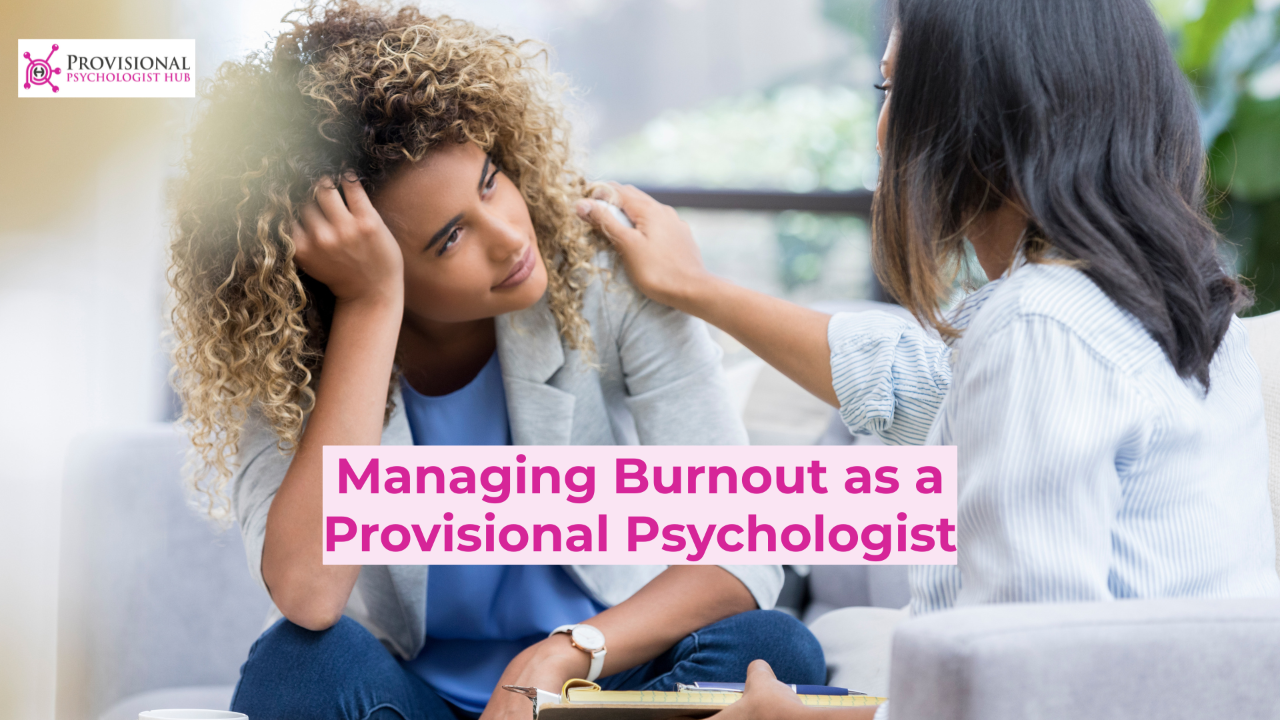
A provisional psychologist's pathway to general registration is one of the most rewarding yet demanding stages of a psychologist's career. Whether you are completing the 5+1 pathway, a higher degree, or another approved route to registration, this period often involves balancing multiple competing responsibilities while continuing to develop your professional identity.
Alongside providing psychological services, provisional psychologists are often managing supervision requirements, professional development, case formulation, report writing, ethical decision-making, administrative responsibilities, and preparation for the National Psychology Exam. Many are also balancing employment, study, financial pressures, and personal commitments. It is not uncommon to feel stretched across multiple areas at once.
While these challenges are a normal part of professional development, they can also place considerable strain on your wellbeing if they are not recognised and managed. Looking after your own mental health is not separate from becoming an effective psychologist—it is an essential part of competent and sustainable practice.
What Does Burnout Look Like?
Burnout is a common experience among psychologists and provisional psychologists alike. It develops gradually, often making it difficult to recognise until it has begun affecting your work, wellbeing, and confidence. Identifying the early warning signs allows you to seek support and make adjustments before burnout becomes more severe.
- Persistent exhaustion that does not resolve with rest
- Reduced motivation or enthusiasm
- Increased cynicism or emotional detachment from clients
- Feeling overwhelmed by administrative or logbook requirements
- A sense of dread before tasks
Experiencing one or more of these signs does not necessarily mean you are burnt out, but persistent or worsening symptoms may indicate that your current workload or stress levels are becoming unsustainable. Recognising these signs early provides an opportunity to reflect, seek support, and implement strategies that protect both your wellbeing and your professional development.
Remember that experiencing periods of stress or fatigue does not reflect your ability or suitability as a psychologist. Developing sustainable work habits, maintaining healthy boundaries, and prioritising your own wellbeing are important professional skills that will continue to support you throughout your career.
Strategies for Managing Burnout
Talk about it in supervision. Supervision is not just a space for case discussion. It is a place to explore how the work is affecting you personally and professionally.
Set realistic expectations. The internship is a marathon, not a sprint. Work with your supervisor and employer to set a pace that is sustainable for you.
Protect your time outside of work. Maintaining hobbies, relationships, and routines outside of your clinical role is not a luxury, it is a professional necessity.
Seek support early. Whether that is speaking with your supervisor, accessing employee assistance programs, or seeking personal therapy, getting support early makes a significant difference.
Access career coaching. If uncertainty about your career direction is contributing to your stress, our career coaching service can help you clarify your goals and feel more confident about the path ahead.
Professional Reflection, Reflexivity, Deliberate Practice, and Self-Care
Looking after your wellbeing is not separate from becoming a competent psychologist—it's an essential part of professional practice.
The Psychology Board of Australia's professional competencies emphasise the importance of professional reflection and reflexivity, purposeful and deliberate practice, and managing your wellbeing through self-care. These capabilities help psychologists practise safely, ethically, and sustainably throughout their careers.
Professional reflection involves thinking critically about your work, your clinical decisions, and your professional development. Reflexivity goes a step further by encouraging you to consider how your own experiences, values, assumptions, and emotional responses may influence your interactions with clients. Developing these skills through regular supervision and self-reflection strengthens clinical judgement and supports ongoing professional growth.
Purposeful and deliberate practice means intentionally identifying areas for development, seeking feedback, and continuously refining your skills rather than simply accumulating experience. When combined with regular reflection, deliberate practice helps build competence and confidence over time.
Equally important is maintaining your own wellbeing. Self-care is not an optional extra or a sign of weakness—it is a professional responsibility. Looking after your physical and mental health enables you to provide high-quality care while reducing the risk of burnout and compassion fatigue.
Research consistently shows that burnout is a significant issue within the psychology profession. A systematic review by Simionato and Simpson (2018) found that applied psychologists frequently experience burnout, with contributing factors including high workloads, administrative demands, emotional labour, organisational pressures, and limited workplace support. The review also highlighted the importance of supportive supervision, manageable workloads, professional development, and organisational support in reducing burnout and promoting long-term wellbeing.
Developing habits of reflection, seeking regular supervision, engaging in deliberate practice, and prioritising self-care throughout your internship will not only help you meet professional competency requirements but will also support a healthier and more sustainable career as a psychologist.
Asking for Help Is a Professional Skill
One of the most valuable skills you can develop as a provisional psychologist is knowing when to ask for help. It can be tempting to believe that you should be able to manage every challenge independently, particularly when you are focused on demonstrating competence and progressing towards registration. However, recognising your limits and seeking support are signs of professional judgement, not weakness.
Psychology is built on reflection, consultation, and lifelong learning. No psychologist, regardless of experience, is expected to know everything or navigate every challenge alone. Seeking guidance from supervisors, peers, or trusted colleagues is a normal and important part of safe, ethical practice.
- Discussing a challenging client presentation with your supervisor.
- Letting your workplace know if your workload has become unmanageable.
- Seeking clarification when you are unsure about ethical or clinical decisions.
- Reaching out to peers who may be experiencing similar challenges.
- Accessing your own psychological support if work-related stress is affecting your wellbeing.
Here are some helpful links:
- Find a board approved supervisor to help with practitioner burnout: HERE
- Explore career coaching resources: HERE
- Upcoming Webinar "Without Burning Out" by AAPI on the 7th of October 2026: LEARN MORE
- Helpful Podcasts: "Burnout to Recovery" by Shannon Swales & "Burnout & Self Care" by Mental Work
If You Are In Need Of Immediate Support
If you are experiencing a mental health crisis or need urgent support, please reach out to one of the following services:
- Beyond Blue: 1300 22 4636 or webchat at online.beyondblue.org.au
- Lifeline: 13 11 14 or webchat at lifeline.org.au/crisis-chat
- Kids Helpline: 1800 55 1800 or webchat at kidshelpline.com.au/get-help/webchat-counselling
- Suicide Call Back Service: 1300 659 467
- Parent Line: 1300 30 1300
Remember, your goal as a provisional psychologist is not to prove that you can do everything alone. Your goal is to develop into a competent, reflective, and sustainable practitioner. Knowing when to seek support is an essential part of that journey.
References
Simionato, G. K., & Simpson, S. (2018). The prevalence and causes of burnout among applied psychologists: A systematic review. Frontiers in Psychology, 9, 1897.
Psychology Board of Australia. (2025). Professional competencies for psychologists. https://www.psychologyboard.gov.au/standards-and-guidelines/professional-practice-standards/professional-competencies-for-psychology
Want to stay up to date?
Subscribe to our newsletter for monthly updates and helpful information.
Unsubscribe at anytime!
